Android Panel PC for Industrial HMI & OEM Integration
Controlled Android Panel PCs with locked OS images, stable I/O mapping, and long-term supply support for dedicated HMI terminals, kiosks, and OEM equipment interfaces.
A practical choice when consumer tablets are not stable enough and Windows Panel PCs are more complex than needed.
Industrial Android Panel PC Supplier for OEM HMI Integration
We supply industrial Android Panel PCs for OEM equipment manufacturers and system integrators who need stable HMI terminals for real field deployment. Our systems are used in machines, kiosks, factory terminals, smart cabinets, and embedded control applications.
An Android Panel PC is more than a touchscreen with an Android board inside. In industrial projects, it must align with the application workflow, Android version, driver scope, I/O layout, mounting structure, power input, and long-term replacement plan.
We help confirm these details before sampling, define an approved Android Panel PC configuration, and support repeat production based on the confirmed specification.
- Industrial Android Panel PCs for dedicated HMI terminals
- Android version locking and factory image control
- I/O, peripheral, and driver requirement review
- Touchscreen, mounting, enclosure, and interface integration
- Approved configuration for repeat production and long-term supply
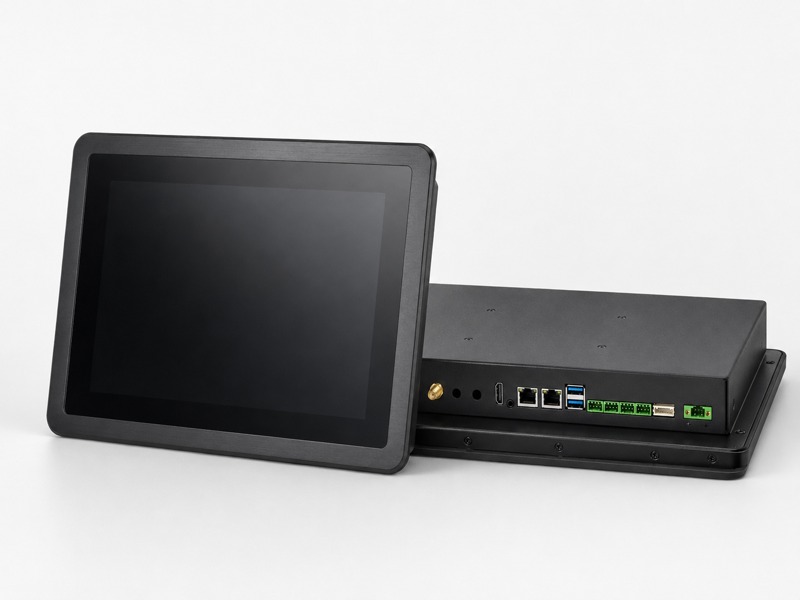
When Android Panel PCs Are the Right Fit
A good fit when your touchscreen terminal needs a defined function, stable interfaces, controlled software, and repeatable supply from sample to field deployment.
The next batch must match the approved sample
For equipment builders who need the same screen size, cutout fit, mounting method, Android image, I/O layout, and hardware configuration across production batches.
Ports, drivers, and field service need to be clear
For integration teams connecting scanners, printers, cameras, sensors, LAN, USB, RS232 / RS485, GPIO, or other peripherals before installation on site.
Installed units must remain serviceable for years
For HMI terminals, kiosk systems, factory data terminals, smart cabinets, and OEM touchscreen devices that need stable operation and replacement support after deployment.
What We Check Before Sample Approval
Before a sample is confirmed, we review the practical details that affect installation, software behavior, field maintenance, and repeat production.
Will it fit your enclosure?
- Size range: 7" / 10.1" / 12.1" / 15.6" / 21.5" typical
- Mounting: panel mount, VESA, or custom bracket design
- Front design: sealing, cover glass, AG / AR / AF, or bonding options
- Review items: cutout, cable routing, service access, and enclosure fit
Will it run the same way in every unit?
- Android build: selected and controlled for the project
- Application flow: boot behavior, kiosk mode, and user access rules
- Peripheral support: scanner, printer, camera, sensors, or other device drivers
- Update method: factory update or OTA strategy based on project ownership
Can it be serviced after installation?
- Operating conditions: brightness, temperature range, duty cycle, and power input
- Reliability items: thermal planning, EMC / ESD focus, watchdog, and recovery options
- Service planning: connector access, replacement fit, and installation constraints
- Supply planning: production batch control, change notice, and replacement support
Send your drawing, display size, I/O list, peripheral models, operating environment, and target quantity. We can review possible risks before you move to sample approval.
I/O and Peripheral Integration
Port selection is not only about quantity. For Android HMI projects, we review the interface type, connector location, driver support, cable routing, and service access together.
- Networking: LAN, Wi-Fi / Bluetooth optional
- USB: USB host ports for peripherals
- Serial: RS232 / RS485 by project
- Fieldbus: CAN if required
- Digital I/O: GPIO by application
- Audio / Camera: reviewed when needed
For accurate review, please send the peripheral models you plan to use, such as scanner, printer, camera, sensors, card reader, or other connected devices.
Connectors need to work after installation
In many equipment and kiosk projects, the port itself is only one part of the decision. The connector position, harness direction, access space, and driver behavior can affect installation and maintenance.
We review I/O mapping, cable routing, peripheral support, and service access before sampling to reduce rework after the enclosure or terminal layout is fixed.
Hardware Details That Affect Field Reliability
For Android HMI terminals, hardware stability depends on more than the CPU board. Thermal path, power behavior, connector layout, and mounting structure all affect how the unit performs after installation.
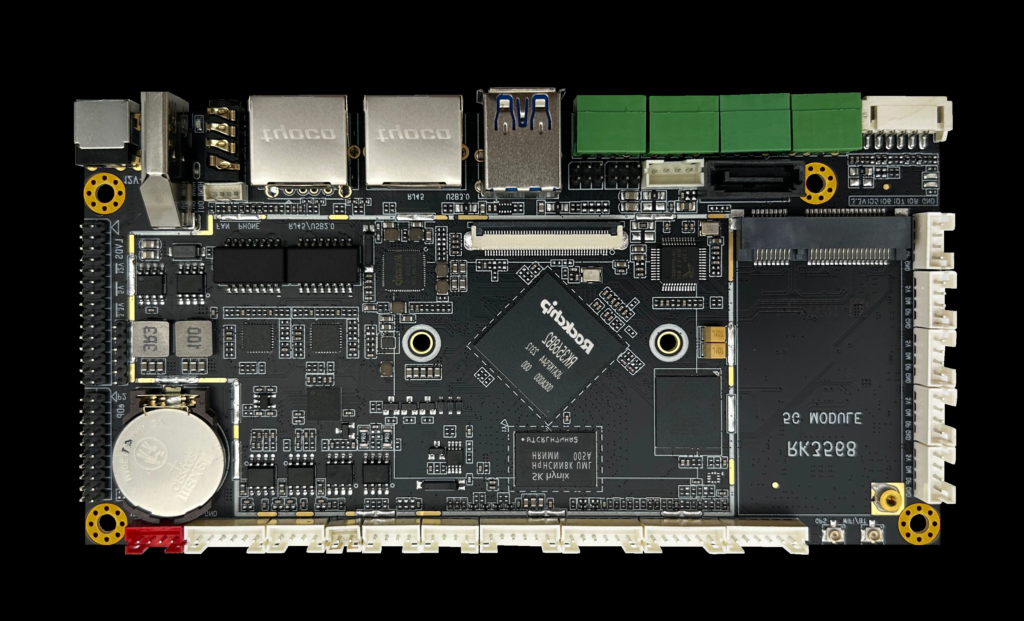
Board layout, connector access, thermal path, and power behavior are reviewed as part of the complete terminal design.
- Thermal path: heat source, enclosure space, and duty cycle
- Power behavior: input range, boot behavior, and recovery needs
- Connector layout: cable direction, port access, and service space
- Mechanical structure: mounting consistency, rear clearance, and assembly fit
The goal is simple: the terminal should be easy to install, stable to run, and practical to service in the field.
Android Panel PC or Windows / Linux Panel PC?
Some projects need a simple, locked HMI terminal. Others need to run existing PC software or a custom Linux stack. The right choice depends on your application, software ownership, and long-term maintenance plan.
Best when the terminal has one clear job
- Dedicated HMI, kiosk, data entry, or equipment control interface
- Controlled UI flow with limited user access
- Android image, drivers, and update method defined by project
- Simpler field behavior when the application scope is fixed
- Suitable when the customer or SI owns the application software
Usually selected when the goal is a stable touchscreen terminal with predictable behavior, rather than a flexible PC environment.
Best when PC software or deeper OS control is required
- Windows software, legacy applications, middleware, or custom Linux stacks
- Multi-application workflows or more complex software environments
- Higher flexibility for software reuse and system expansion
- More responsibility for OS, drivers, security updates, and maintenance
- Suitable when your team needs PC-level control and compatibility
Usually selected when existing software compatibility or engineering-level system control is more important than simplifying the terminal behavior.
Selection note: Choose Android when the terminal function is defined and the field workflow should stay simple. Choose Windows or Linux x86 when existing PC software, legacy compatibility, or deeper OS control is required. If the choice is unclear, send the application workflow and software requirements for review.
Keeping the Approved Android Panel PC Configuration Stable
After a sample is approved, the next challenge is keeping the same configuration stable across repeat orders, field service, and future replacement.
- Approved baseline: confirmed hardware, Android image, interface layout, mechanical fit, and BOM reference
- Production consistency: the approved configuration is used as the reference for repeat orders
- Change handling: ECO review and PCN notification when changes may affect fit, function, or supply
- Replacement planning: service units are checked against image compatibility, connector access, and installation fit
For projects expected to run for 3–5 years or longer, lifecycle assumptions should be discussed before sample approval.
- Approved configuration summary
- Android image / baseline reference
- I/O and peripheral configuration notes
- BOM revision and change tracking
- Validation checklist or test summary when required
- IQC / IPQC / OQC inspection records when required
- Compliance documents or report summaries when available
Available records depend on the selected model, configuration, order scope, and project qualification requirements.
Customize the Platform, Keep the Project Responsibilities Clear
Customization works best when the approved configuration, application ownership, update method, and validation process are defined before deployment.
Make it fit the product and workflow
- Display & touch: size, brightness, PCAP tuning, cover glass, AG / AR / AF, and bonding options
- Mechanical design: panel mount, VESA, bracket, enclosure adaptation, sealing, and front protection
- Android system: version, factory image, kiosk behavior, boot behavior, access control, and update method
- Interfaces: I/O layout, connector planning, peripheral support, and driver review by application
- Production support: sample build, pilot run, approved configuration, BOM reference, and inspection records when required
Keep ownership clear before deployment
- We support: industrial hardware, Android baseline, driver scope, I/O configuration, and integration notes
- Your team owns: application software, user workflow, business logic, and end-user operation rules
- We align together: peripheral list, update method, validation process, service access, and production configuration
Best results come from fixed application scope, confirmed hardware configuration, controlled Android image, and a shared validation plan.
When application logic, update ownership, or peripheral requirements keep changing, sample approval and field deployment become harder to control.
Send the Details We Need to Review Your Android Panel PC Project
A clear request helps us check the right display, Android system, I/O layout, mounting method, and lifecycle risks before you move to sample approval.
Project basics
- Application type and industry
- Display size, brightness, and touch requirements
- Mounting method, drawings, or cutout dimensions
- Operating environment and duty cycle
- Target quantity, pilot plan, and schedule
System & integration details
- I/O list: LAN, USB, RS232 / RS485, CAN, GPIO, etc.
- Peripheral models: scanner, printer, camera, sensors, card reader, etc.
- Android version, kiosk mode, or boot behavior requirements
- Update ownership: factory update, OTA, or customer-managed update
- Expected service life and replacement requirements
You do not need every detail at the first contact. Send what you already know, and we can identify the missing items during evaluation.
A clearer path before sampling
- Recommended configuration direction
- Key feasibility questions
- Integration risks to confirm early
- Documents or drawings needed for the next step
The goal is to reduce back-and-forth before sample approval and avoid late changes after the enclosure, I/O, or Android image is already fixed.
Frequently Asked Questions
Common questions before starting an Android Panel PC evaluation.
Let’s Discuss Your Requirements
Share your application, requirements, or current challenge. Our team will review the details and recommend a practical way forward.