How Industrial Touch Screens Work and How to Select the Right Technology

Quick Answer: How Industrial Touch Screens Work Industrial touch screens detect input using pressure (resistive), capacitance …
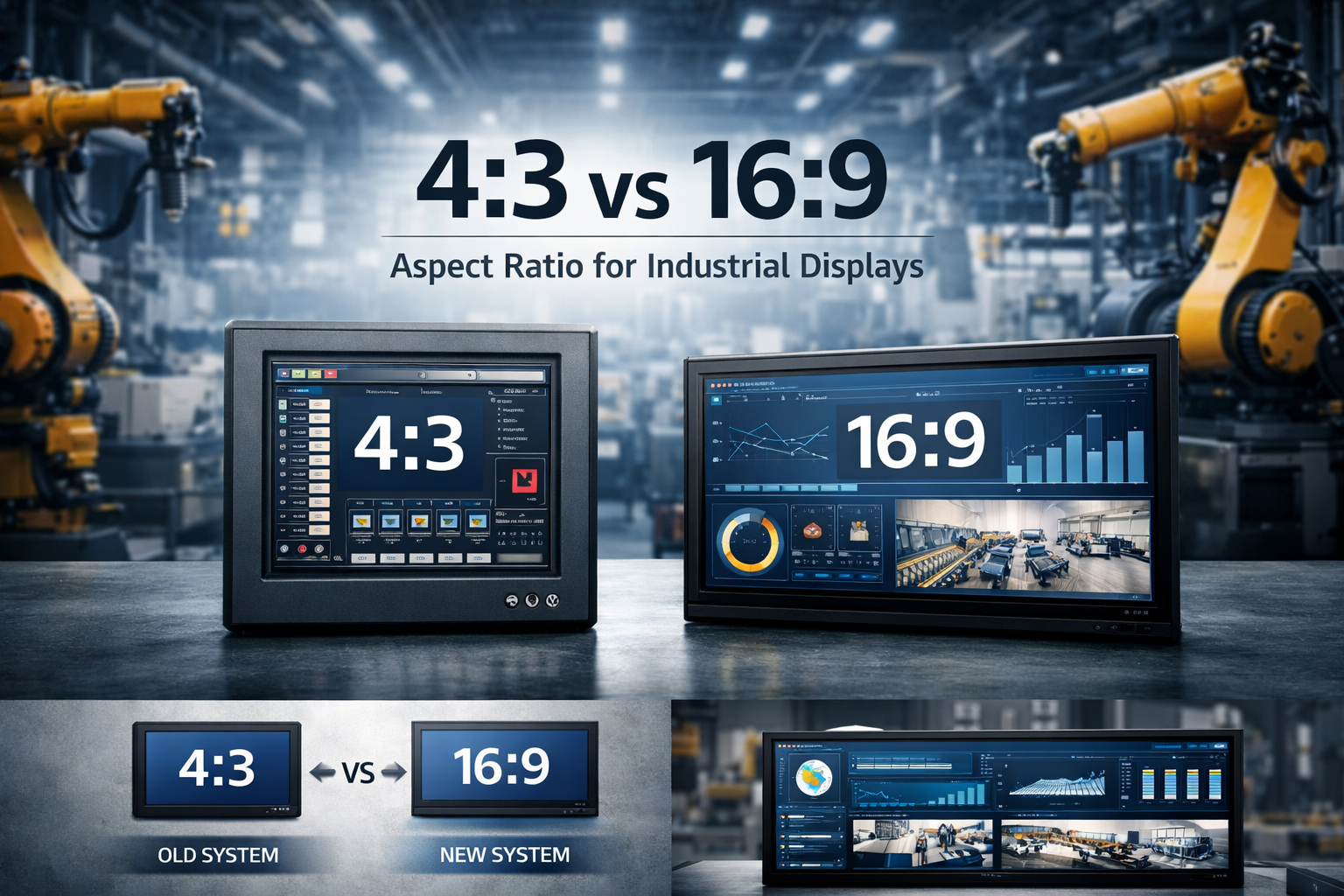
Selecting the correct aspect ratio (4:3 vs 16:9) for an industrial display is not only a visual decision—it directly affects mechanical integration, software compatibility, and long-term system reliability.
For OEM engineers, system integrators, and technical procurement teams, this choice is typically constrained by:
This article explains how each aspect ratio behaves in industrial environments—and how to choose the appropriate option based on real engineering constraints.For a broader overview of industrial touch Displays, selection criteria, and system design considerations, refer to our Custom Industrial Display Design for OEM Systems
For most industrial projects:
👉 This approach is widely used in OEM integration projects to minimize system compatibility issues and avoid costly redesign.
👉 If you are unsure, it is recommended to consult an industrial display supplier before making a final decision.Choosing the wrong aspect ratio may require mechanical redesign and software adjustment, increasing both cost and project timeline.
Aspect ratio defines the proportional relationship between display width and height.
In industrial systems, it directly influences:
If the aspect ratio does not match system requirements, typical issues include:
The 4:3 aspect ratio remains widely used due to long equipment lifecycles and reliance on legacy software.
Use 4:3 when:
👉 In most upgrade projects, maintaining compatibility takes priority over format changes.
In many industrial applications, replacing an existing 4:3 display without redesign is critical.
As an industrial display manufacturer, we support OEMs and system integrators with:
Typical sizes include:
👉Contact us to evaluate your system and avoid compatibility risks before making a decision
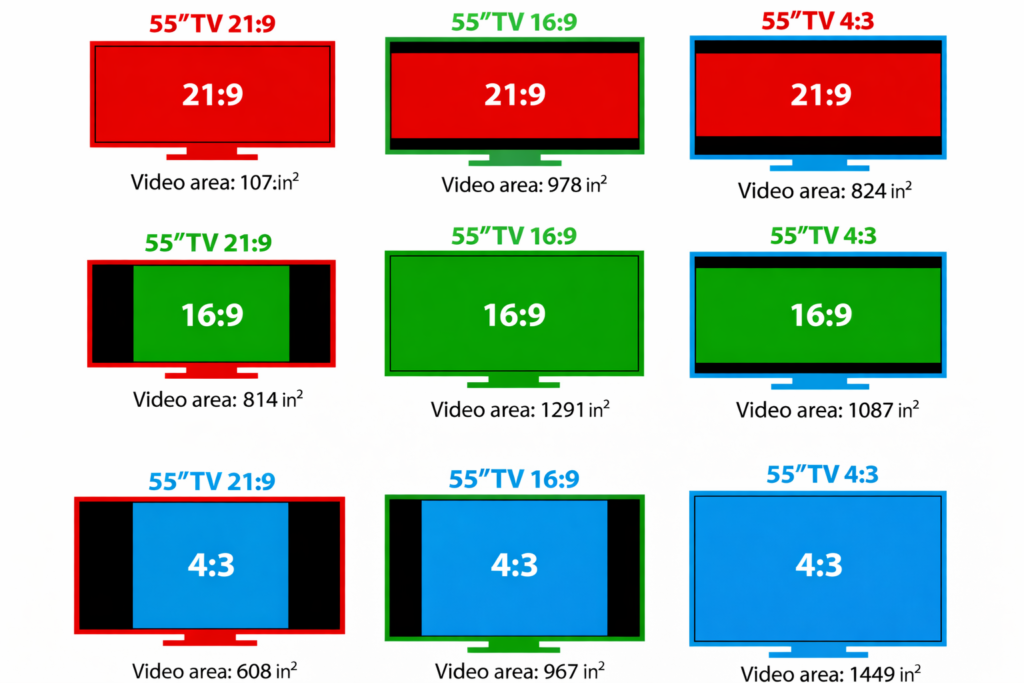
The 16:9 aspect ratio is standard in modern systems and is commonly used in new industrial designs.
Use 16:9 when:
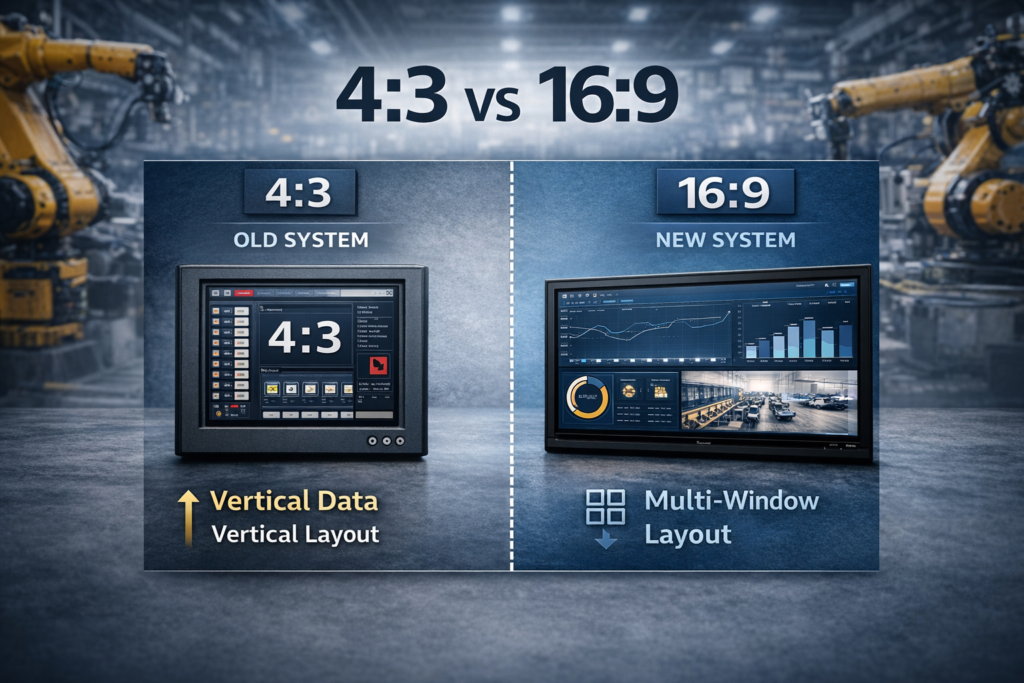
| Scenario | Recommended Aspect Ratio |
|---|---|
| Legacy equipment upgrade | 4:3 |
| PLC / SCADA interface | 4:3 |
| Fixed panel cutout | 4:3 |
| New system design | 16:9 |
| Multi-window interface | 16:9 |
| Video / visualization system | 16:9 |
👉 Key Insight:
4:3 = compatibility and lower integration risk
16:9 = flexibility and modern interface support
While 16:9 is standard in commercial systems, industrial platforms evolve more slowly.
👉 Both formats will continue to coexist due to lifecycle differences.
When evaluating 4:3 vs 16:9, consider:
👉 In most cases, compatibility constraints should guide the decision.
👉 Based on typical OEM integration scenarios, maintaining compatibility is often more critical than adopting newer formats.
Selecting the wrong display ratio can lead to:
We support OEMs and system integrators with:
In most industrial scenarios, 4:3 is preferred for legacy systems, while 16:9 is recommended for new designs and modern interfaces.
Yes. They are widely supported for long lifecycle and replacement projects.
Typically not directly. Mechanical and software adjustments are usually required.
16:9 is preferred for new designs, while 4:3 is commonly used for upgrades.
Quick Answer: How Industrial Touch Screens Work Industrial touch screens detect input using pressure (resistive), capacitance …

Introduction Touch accuracy degradation is a recurring issue in industrial HMI systems. Unlike consumer devices, industrial …

Introduction In industrial equipment, a touch interface is not only a user input layer—it is a …
Introduction In industrial HMI systems, cover glass is the outermost interface between the user and the …
Send your application details. We respond with configuration direction and next steps.