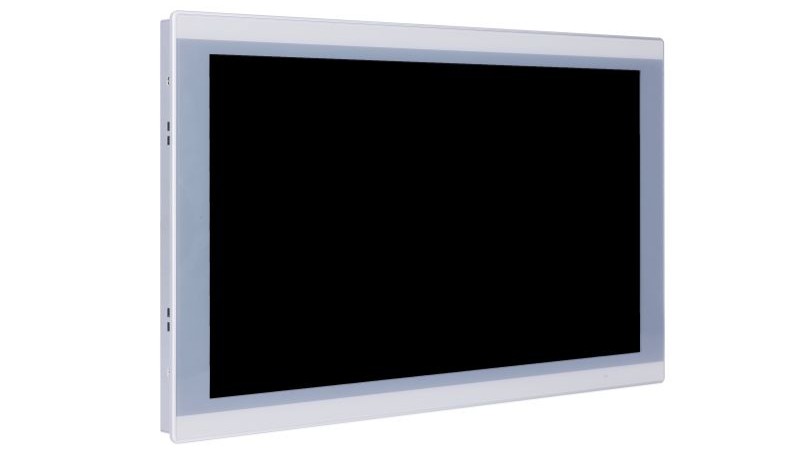
Custom Touch Panels & Integration-Ready Displays for OEM/ODM Programs
When standard touch modules don’t match your stack-up, mounting, or field conditions, send what you know. We help you lock a controlled specification (touch + optics + mechanics + interfaces) and deliver prototype builds, validation samples, and production with BOM control.

We support OEM/ODM programs where custom touch is part of a larger system
We are not a catalog seller. We work with industrial OEM teams who need custom touch panels, integration-ready monitors, or panel PCs that must remain stable after installation — not just on the bench.
Our role is to translate partial project inputs — mounting direction, environment, interface, and usage — into a controlled specification covering touch behavior, optics, mechanics, and BOM discipline. This allows you to validate early, control changes, and release with confidence.
Early-stage discussions are welcome. If some requirements are still unclear, we help structure the unknowns before samples and validation begin.
Lock the Right Controlled Specifications with Fast Inputs
We evaluate fit using environment, mechanics, and program risk inputs.
- • Share what you already know — we’ll guide missing items step-by-step.
- • Stability depends on stack-up, environment, and system noise/grounding.
- • The output is a revision-controlled spec you can validate and release.
Not sure what to send? Jump to the Spec Checklist.
Gloves, Water, Sunlight, EMI
Define real field conditions to set tuning and validation targets.
- Glove types & wet operation (water rejection targets)
- Outdoor readability / condensation notes
- Known EMI level, grounding, and shield constraints
Fast inputs: glove type, wet scenario, outdoor/indoor, known EMI notes.
Mounting, Sealing, Stack-up
Align structure early to avoid late-stage rework.
- Embedded / open-frame / VESA (and front depth limits)
- Bezel / cut-out / compression & tolerance notes
- Flat-front concept & sealing constraints (system-defined)
Fast inputs: mounting method, cut-out/bezel, stack-up sketch (if any), depth limits.
Validation Steps & BOM Stability
Define validation gates and control BOM changes for repeatability.
- Prototype → validation sample → pilot → production planning
- Controlled BOM (versioning / approved alternates if needed)
- Change management to protect long-term stability
Fast inputs: target qty, timeline, life-cycle expectation, any approved component rules.
If you don’t have a complete spec yet, that’s normal — partial inputs are common early.
Field stability is a system outcome
Stability depends on stack-up, environment, and grounding/noise behavior.
- Touch tuning targets must match glove/wet interaction.
- Optical choices depend on brightness plan and condensation risk in the real enclosure.
- EMI behavior is system-level: cable routing, grounding, shielding, and I/O layout.
- Validation must use your real mechanical stack-up and mounting tolerance.
We align touch/display specs to support system validation — without claiming system ratings without full context.
Next step: use the Spec Checklist to structure inputs.
Custom touch is a system decision — not a drawing change
Most field failures come from early variables left undefined.
- Touch behavior targets: glove/wet expectations not set early
- Optics & bonding: reflections/condensation not aligned to enclosure reality
- Mechanical stack-up: bezel compression & tolerance drift changes response
- EMI/grounding: system noise causes ghost touches and tracking drift
- Program control: BOM changes break validation repeatability
What we do
- Controlled spec: touch + optics + mechanics + interfaces
- Controller selection & touch tuning (targets defined by use case)
- Glass + bonding options (air / OCA / LOCA)
- Prototype → validation samples → production with BOM control
What we don’t claim
- System IP/IK ratings without enclosure design context
- EMC/EMI “pass guarantee” without system-level test setup
- On-site installation responsibility (unless scoped)
- Undefined lifetime programs without change control
For details, refer to Core Engineering Reality.

Integration-ready build: mechanical fit + touch tuning + interface stability.
- Controlled specification sheet (rev-controlled)
- BOM with approved alternates (if needed) + change log alignment
- Validation checklist (touch / optics / mechanical / interfaces)
- Prototype & validation samples aligned to your real stack-up
- Problem: Outdoor kiosk, glove + wet use → unstable tracking after installation
- Root cause: Grounding/noise coupling + stack-up tolerance not aligned to tuning targets
- Deliverables: Controlled spec update + tuning targets + mechanical tolerance notes
- Result: Stable behavior across validation samples before production release
Send mounting method, OS/interface, and field conditions — we’ll recommend a controlled spec quickly.
Choose the delivery scope — not a catalog SKU
Select what you integrate; we lock a controlled spec behind it.
- • Touch behavior, optics, mechanics, interfaces, and BOM discipline
- • Prototype → validation samples → production release planning
- • Repeatable validation with revision control
If you’re comparing standard models, use product pages. If you’re validating an OEM build, start here.

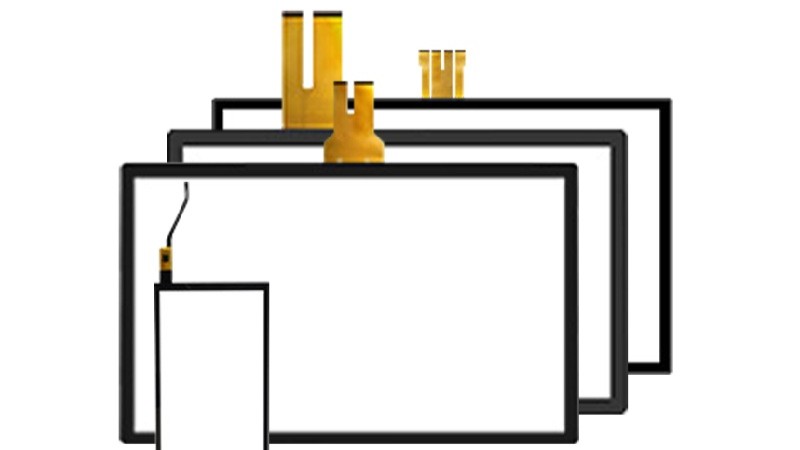
Custom PCAP Touch Panel
Best when display & computing are fixed.
- Touch behavior targets: glove / wet (project-defined)
- Cover glass + treatments: AG / AR / AF
- Bonding options: air / OCA / LOCA (when needed)

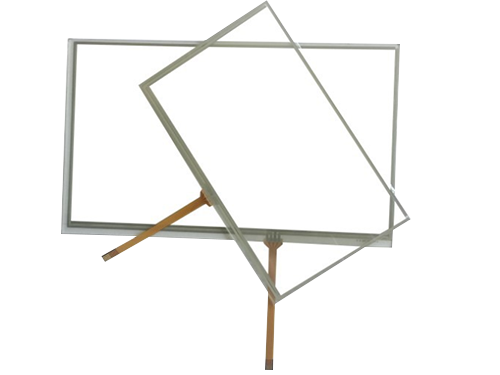
Custom Resistive Touchscreen
Best for stylus / glove-first workflows.
- 4-wire / 5-wire options
- Surface options: anti-glare / hard-coat (project-based)
- Revision control for long-life programs

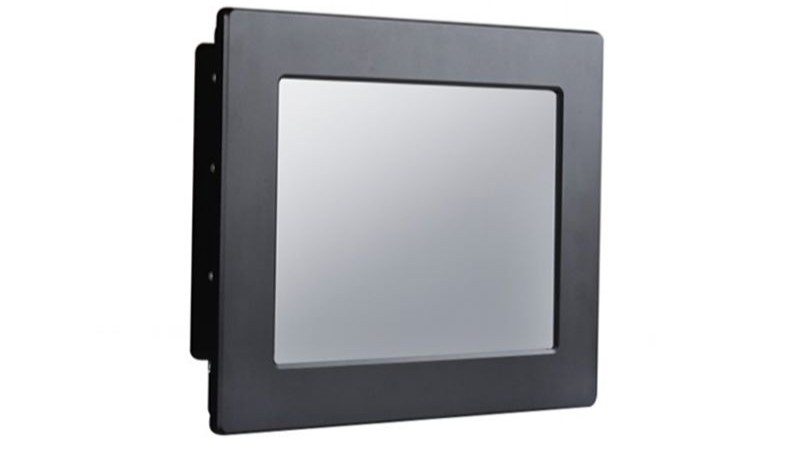
Industrial Monitor (Integration-Ready)
Best when you want a drop-in assembly for validation.
- Open-frame / embedded / VESA concepts
- Brightness plan + glass/bonding alignment
- Interfaces aligned to your system (project-based)

Fanless Panel PC (Integration-Ready)
Best when OS/I/O mapping must be fixed for release.
- Platform direction: Intel / ARM (project-based)
- I/O mapping aligned to enclosure constraints
- Mounting concept for embedded or VESA builds
Not sure which scope fits? Start with the checklist — we’ll recommend the lowest-risk path.
Project inputs that actually determine field stability
Send what you have — we’ll clarify unknowns during engineering review.
- • This checklist reflects the inputs we use to lock a controlled specification.
- • Missing items are normal in early-stage projects.
- • The goal is to avoid late-stage rework and validation drift.
Touch behavior & usage
- Input method: finger / glove / stylus
- Wet conditions / water rejection expectation
- Single-touch or multi-touch requirement
- Known EMI or grounding constraints (if any)
Optics & front glass
- Indoor / semi-outdoor / outdoor usage
- Surface preference: AG / AR / AF (if defined)
- Cover glass thickness or constraints (if known)
- Bonding preference: air / OCA / LOCA (optional)
Mechanical & system context
- Mounting method: embedded / open-frame / VESA
- Panel cut-out or bezel constraint (if available)
- Target temperature & vibration notes
- Interfaces / OS environment (for touch tuning)
Copy into an email. If something is unknown, leave it blank — we’ll clarify during engineering review.
[Delivery scope] Touch layer / Monitor / Panel PC [Mechanical] - Mounting method: embedded / open-frame / VESA - Cut-out / bezel constraints: - Front depth limit / available space: - Stack-up (if any): (glass/touch/LCD/air gap/bonding) [Touch behavior] - Input method: finger / glove / stylus - Glove type (if applicable): - Wet operation scenario / water rejection expectation: - Single-touch or multi-touch: - Known EMI / grounding constraints: [Optics] - Indoor / semi-outdoor / outdoor: - Brightness direction (if known): - Surface preference: AG / AR / AF: - Bonding preference: air / OCA / LOCA: - Condensation / fogging risk notes (if any): [System] - Interface / OS: USB / I2C / RS232 / others; Windows / Linux / Android / custom - Cable length / routing notes (if any): - Grounding / shield constraints (if any): [Program] - Target quantity: - Timeline (prototype / validation / pilot / production): - Life-cycle expectation / BOM stability requirement: - Any approved component rules / alternates policy:
Not ready for an RFQ? That’s fine — use this to start an engineering conversation.
Or jump to Tech Guide for reference (tables are collapsed).
An Engineering-Driven Workflow for Touch Monitors & Panel PCs
Clear inputs. Clear deliverables. Faster validation, fewer surprises, and a stable path to mass production.
We align on your environment, target specs, interfaces, and mechanical constraints to confirm feasibility and surface key risks early (for both Touch Monitors and Panel PCs).
- Size / resolution / brightness
- Touch type
- Interface (HDMI/DP/LVDS/eDP)
- Mounting
- Operating temperature
- Feasibility notes
- Risk items
- Recommended configuration direction
- Cover lens
- Glove / wet use
- Bonding preference
- EMI concerns
- Front IP target (if any)
- CPU platform / OS
- I/O list (USB/LAN/COM/CAN/GPIO)
- Power range & surge
- Thermal limits
You receive a solution summary with BOM direction, quotation, lead time, and a sampling & test plan aligned with your deployment conditions—designed to reduce rework before pilot and mass production.
- Quotation + solution summary
- Sample schedule
- Test checklist
- Display & touch performance in real conditions
- Thermal / environment checks as required
- Integration guidance and change-impact notes
- Brightness / contrast check
- Touch accuracy
- Glove-wet test (if needed)
- Temperature cycling
- Vibration (if needed)
- Basic EMI risk review
- Touch stack-up notes
- Bonding guidance
- Optical / visibility validation items
- I/O mapping
- Thermal approach
- OS image / BIOS options (as required)
We run a pilot first to lock performance stability, then scale to mass production with QC checkpoints, controlled documentation, and shipping coordination—aiming for a stable BOM and predictable delivery.
- Production schedule
- IQC / IPQC / OQC inspection records
- Packing & shipping support
- BOM lock
- ECO / change control when needed
- Version traceability for long-term supply
Ready to start? Send your specs and we’ll return a technical direction & quotation after receiving complete inputs.
Best fit for: OEM/ODM projects, integration builds, mid-to-long term supply. Not ideal for: one-time consumer-grade pricing requests or incomplete requirements.
Fast decisions for early-stage custom touch projects
Use this as reference after you define your use case and mounting direction.
- • Prefer checklist-first if requirements are still forming.
- • PCAP vs resistive depends on interaction model and noise sensitivity.
- • Optics/bonding depends on enclosure reality (brightness + condensation risk).
PCAP vs. Resistive — decision signals
| Decision signal | PCAP | Resistive |
|---|---|---|
| Interaction model | Multi-touch, gesture-friendly UI | Precise point input, stylus workflow |
| Gloves | Possible with tuning (depends on glove) | Works naturally with gloves |
| Wet conditions | Designable with tuning & edge handling | Depends on front design and usage habits |
| Noise sensitivity | More sensitive to EMI / grounding strategy | Usually less sensitive to system noise |
| Typical fit | Modern interaction + multi-touch requirement | Industrial workflow, stylus-heavy or glove-first |
For fast recommendations, share: glove type (if any), wet scenario, mounting method, and known grounding/EMI constraints.

Bonding & optics — when it matters
Bonding is chosen to match readability and enclosure risk.
- Improve readability and reduce internal reflections
- Choice depends on front glass, brightness plan, condensation risk
- Validate in real stack-up before release
- Surface: AG / AR / AF
- Impact: IK target
- Sealing: system-level IP concept (enclosure-defined)
For system dependencies, see Core Engineering Reality.
Questions that reduce rework and speed up OEM decisions
These answers focus on what to send and what to decide later.
Send what you have — partial inputs are common.
- Delivery scope (touch layer / monitor / panel PC)
- Mounting method + cut-out/bezel constraints
- Stack-up sketch (if any)
- Interface + OS/driver environment
- Environment notes (gloves/water/sunlight/EMI)
- Target quantity + timeline
Yes — early discussion prevents later rework.
- We focus on deciding variables first (touch, optics, stack-up, interfaces, grounding).
- We clarify missing inputs using the checklist.
- We propose a controlled spec + sample/validation plan.
We protect repeatability with revision control and defined gates.
- Rev-controlled spec + BOM versioning
- Approved alternates aligned before release
- Change control aligned to validation gates
We propose bonding and glass options; system ratings require enclosure context.
- Bonding (air/OCA/LOCA) aligned to readability and condensation risk
- IK/IP are system-level outcomes (enclosure-defined)
- We align touch/display spec to support your system validation
Choose the lowest-risk scope that matches what’s already fixed.
- Touch layer: display/computing fixed; fastest path
- Monitor: mechanical + interfaces need repeatable validation
- Panel PC: OS/I/O mapping + thermal/mechanical constraints must be fixed
Typical flow:
- Engineering review → controlled spec
- Prototype build → validation samples
- Pilot → production release
Any of these reduce back-and-forth:
- Cut-out / bezel drawing (DXF/PDF) or window size
- Stack-up sketch (even a photo/markup)
- 3D STEP for mounting context (optional)
- Interface + OS/driver environment
- Photos of enclosure and cable routing (if available)
MOQ is project-based and depends on scope and processes.
- Prototype/validation typically start with small quantities
- MOQ for pilot/production is aligned after controlled spec is locked
- Tooling/new materials may affect MOQ and lead time
Start with partial inputs — we’ll structure the rest
We can begin with your mounting direction, OS/interface, and field conditions.
- • You’ll receive a controlled spec draft + missing-items checklist
- • Validation samples are aligned to your real stack-up
- • BOM versioning + change control protects long-term stability
Tip: If you’re unsure, start with the Spec Checklist.
Ready for an Engineering Review?
Share your application and key requirements for Touch Monitors or Panel PCs. Our engineers will review feasibility, risks, and recommend the right configuration direction.